UX Research · AI Product Design · 2025–2026
From Brand Invisibility
to Product
The research behind Lumet.to
A research narrative connecting three projects across two industries — tracing how a gap I discovered on the job became a validated product category that no existing tool had addressed.
Method
Lived research · competitive audit · cross-industry pattern matching
Outcome
B2B SaaS product · validated category gap
Timeframe
2025–2026
The finding
"Brands are increasingly discovered through LLMs — and most of them are invisible, misrepresented, or defined by their worst moment."
This isn't a trend observation. It's a pattern I confirmed across three separate projects, in two different industries, over two years. The gap exists at the intersection of brand reputation, AI systems, and the shift in how people find information — and in 2025, no product existed to address it.
Three projects · one insight
How the research connected
Origin · 2025
DG Cosmetics
Marketing Strategist
Discovered that a past brand crisis had left LLMs with a distorted, outdated perception of the brand. No existing tool could measure or fix it.
Validation · 2025
G&MB LUX
Designer & Strategist
While auditing a luxury construction firm's digital presence, found the site was returning a 403 error to AI crawlers — completely invisible to LLMs. Same problem, different industry.
Product · 2025-2026
Lumet.to
Co-founder · Product Designer
Two data points confirmed a category-level gap. Built a B2B SaaS platform that tracks live LLM brand presence and gives teams tools to actively improve it.
See it live →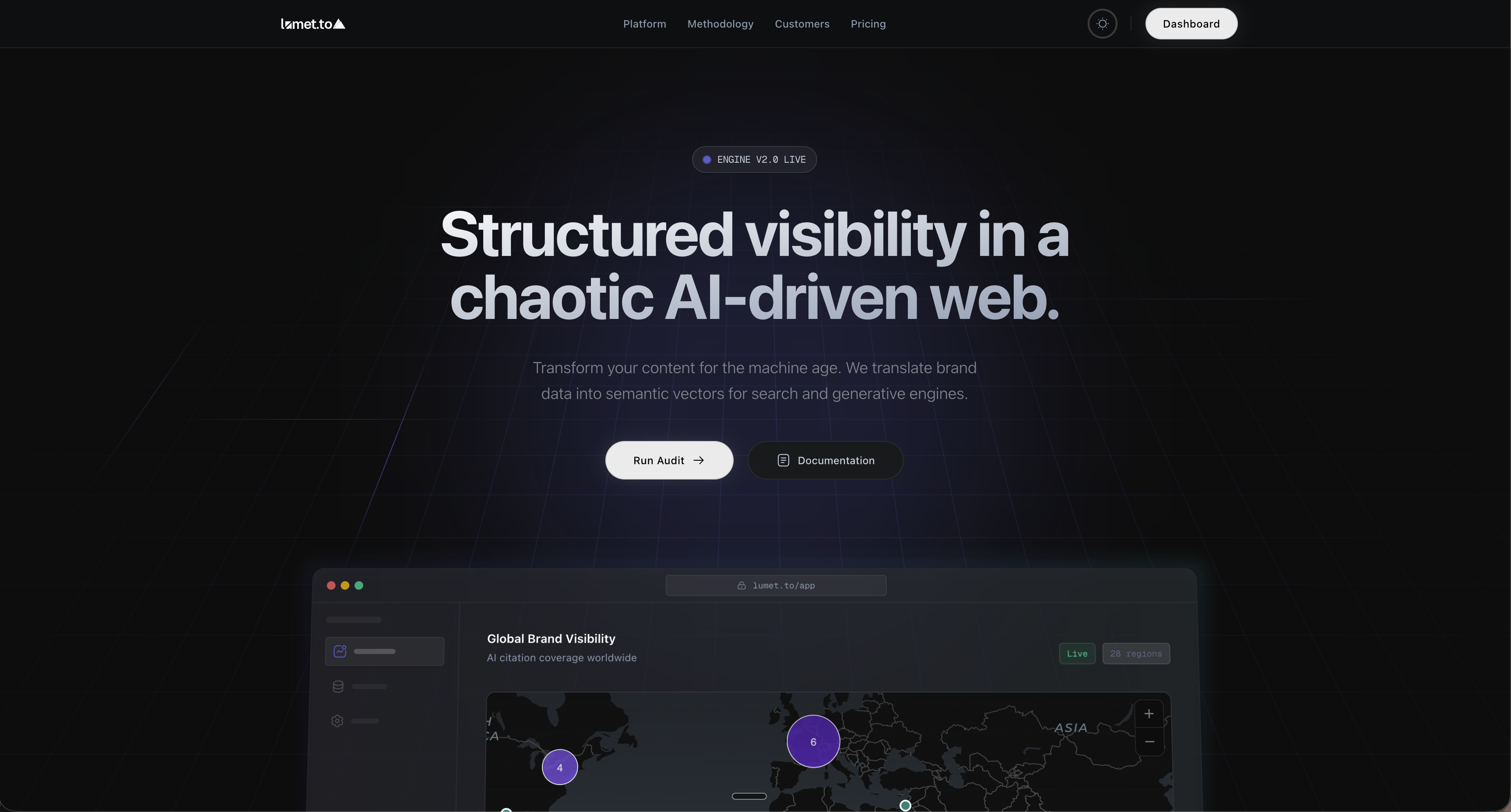
Research process
Five phases from observation to launch
What I learned
Three insights that shaped the product
AI creates new invisible layers in existing systems
LLM brand presence isn't a new problem — it's an old problem (brand reputation) in a new environment that existing tools weren't built to see.
Pattern recognition across industries validates a category
Spotting the same gap at a cosmetics company and a construction firm confirmed this wasn't a niche issue. It was systemic — and unsolved.
The best insights come from being the frustrated user first
I wasn't researching a market trend. I was trying to do my job and hitting a wall. That lived frustration is the most reliable signal that a real product gap exists.